Free commercial real estate comps, the whole set
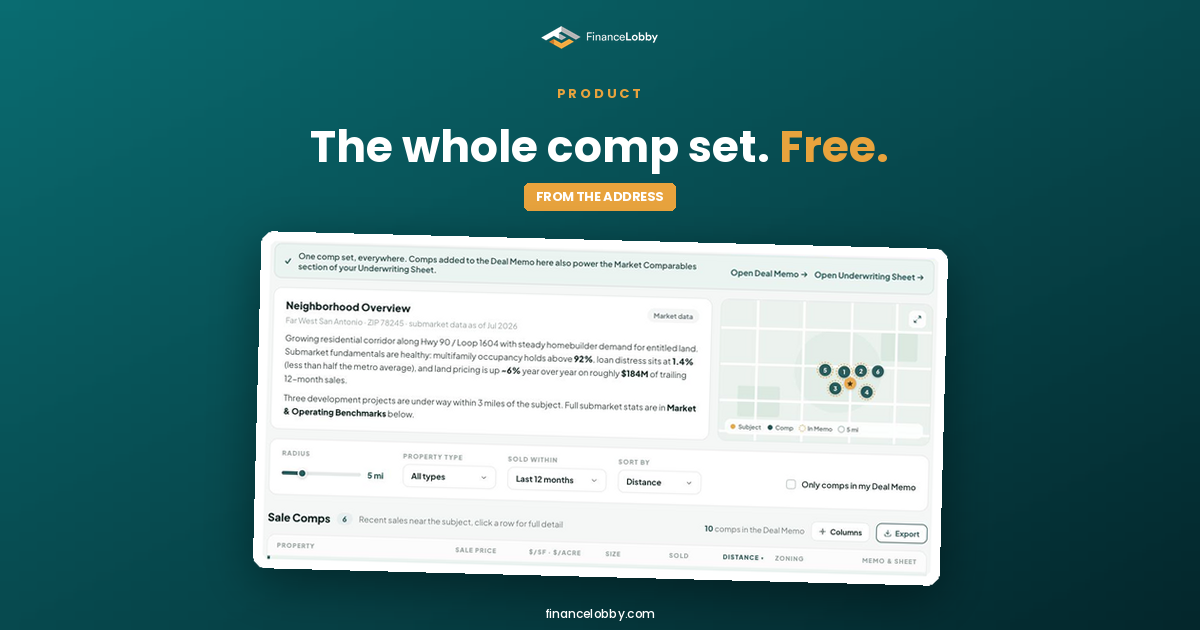
Finance Lobby builds a sales and rent comp set from a property address: the comparables, the pricing, and a map of where each one sits against your subject. Sign up through the free comps link and every comp in the set is visible, not three rows behind a blur. The comps you keep feed straight into your deal memo and the market section of your underwriting.
That is the offer. The rest of this article is why it matters and how to use it well.
Why the comp set decides the loan before the borrower does
A lender's first question on a new deal is rarely about the borrower. It is about value, because every sizing test a lender runs starts from it. Loan to value divides by it. Debt yield and coverage are sanity-checked against what the market says the income is worth. If the comp set is thin, the lender fills the gap with their own conservative assumption, and a conservative value is a smaller loan.
We walked through how those tests interact, and which one actually binds, in DSCR Is Almost Never the Number That Sizes Your Loan. The short version: value sits underneath all three. Weak comps weaken every one of them at once.
What most brokers do instead
Three habits, all familiar:
- The old spreadsheet. Comps pulled for a deal a year or two ago, in the same submarket, reused because they are there. Stale sale dates are the first thing a credit analyst circles.
- The paywalled preview. A handful of rows, blurred, with the rest behind a subscription the brokerage cancelled.
- The borrower's own numbers. The owner's view of what the building across the street sold for. Sometimes right. Never citable.
None of these is wrong exactly. They are just the reason a lender goes and builds their own set, on their own timeline, with their own assumptions.
How Finance Lobby builds a comp set
You enter a property address. Finance Lobby returns:
- Sale comps and rent comps near the subject, with sale price, price per square foot or per acre, size, sale date, distance and zoning.
- A neighborhood overview for the submarket, labelled as market data with the date it was taken.
- A map showing the subject and each comp, with the comps you have added to your memo marked.
- Filters for radius, property type and how recently the comp sold, and sorting by distance.
You can see the public version of this, with demo data, on the comps page.
One comp set, everywhere
The part that saves the most time is not the search. It is what happens after. Comps you add to the deal memo also power the market comparables section of your underwriting sheet. One set, used in both places, so the numbers the lender reads in the memo are the same numbers behind the analysis. No copying rows between documents, and no version where the memo says one thing and the model says another.
That is the difference between a comps tool and a financing platform. The comp set is the first page of the deal, and the deal then goes to lenders from the same place: underwriting, deal memo, documents, lender matching and competing quotes.
How to get the free comps
- Use the free comps sign-up link. It is the only route that unlocks the full set on a free account.
- Create a free account.
- Add a deal with the property address.
- Open the Comps tab on the deal.
Using comps well: four habits lenders notice
- Match the property type before the radius. A five-mile set of the right asset beats a one-mile set of the wrong one.
- Keep sale dates inside twelve months where the market allows. If you have to go older, say so in the memo and say why.
- Show your rent comps next to your rent roll. A lender compares in-place rents to market rents to judge whether income is sustainable. Put the comparison in front of them.
- Cut the outlier yourself. If one comp is doing all the work for your value, a credit analyst will find it. Removing it first reads as judgement.
For the full walkthrough of finding and choosing comparables, read How to Find Commercial Real Estate Comparables for Your Deal.
Start with the address
Your next deal starts with an address. Enter it, see the comp set, keep the comps that belong, and take the whole deal to lenders from one place.