Ask a working commercial mortgage broker where a deal lives and you will get a list.
The pipeline is in a spreadsheet, or a CRM somebody built in a weekend. The documents are in a drive. The conversation with the borrower is in email, and the conversation with the lender is in a different email thread, and the urgent version of both is in a chat app. Property data comes from somewhere else again.
None of those systems know about each other. So the broker becomes the integration layer, and the cost shows up in small ways that add up: a deal that never got entered because entering it properly takes four minutes and you were on a call, an appraisal that came in and got filed somewhere nobody could find, a closing that slipped because the one thing holding it up was written in a note nobody opened.
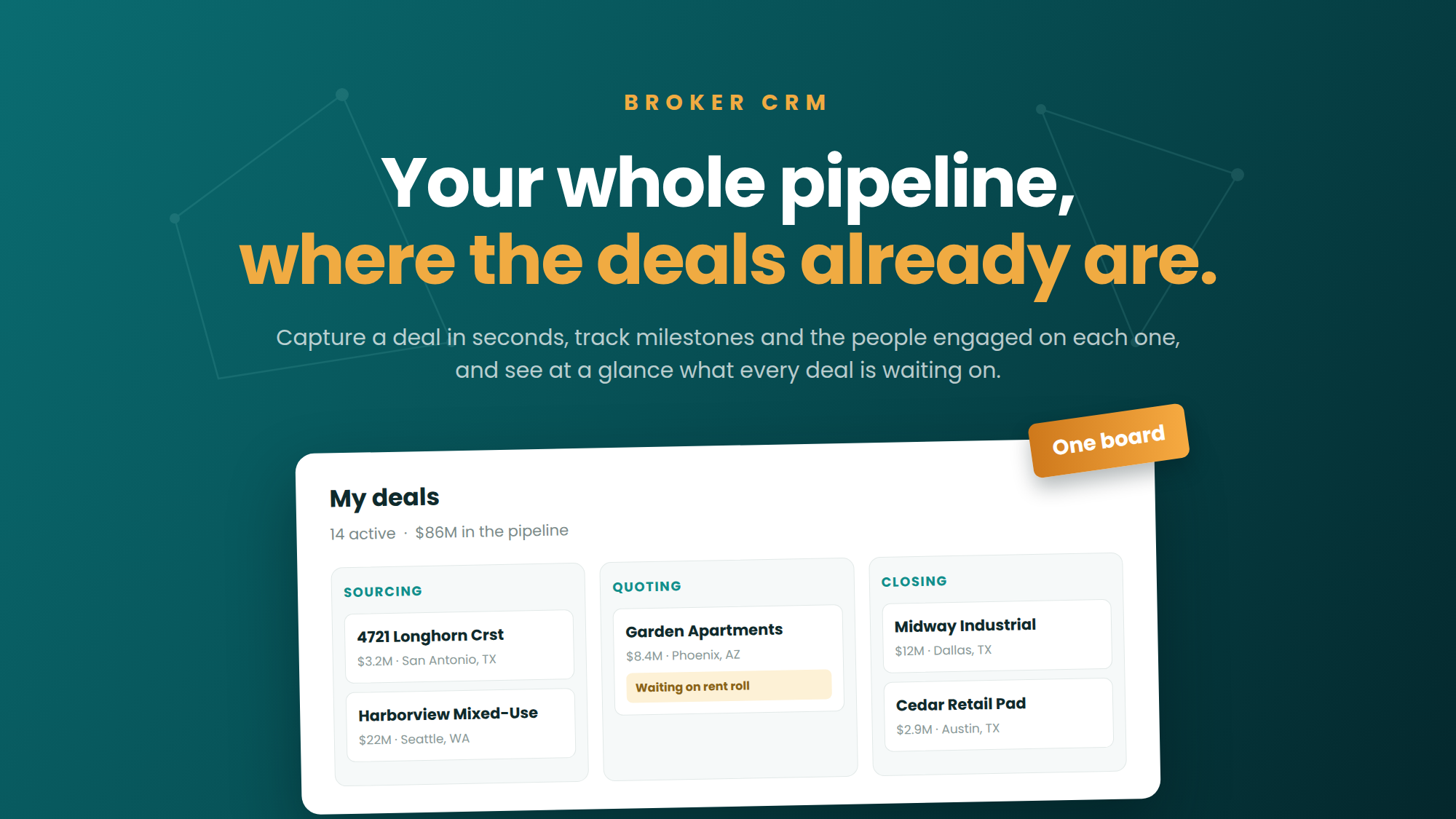
The pipeline now lives next to your deals, on the same platform where you already send them to lenders.
One board, every deal
My Deals puts your whole pipeline on a single board, organized by where each deal actually is: application, sourcing, quoting, term negotiation, processing, closing. One toggle switches between your active book and everything funded, lost or archived.
That is the view you want open when someone asks what is happening this month.
Capture a deal in the time it takes to say it
The reason pipelines go stale is not discipline. It is friction. If adding a deal means a form with fourteen fields, you will not do it while the borrower is still on the phone, and if you do not do it then, you do it later, which means sometimes never.
So capture is one field. Hit the shortcut from anywhere in the platform, type what you know, save. The deal exists.
Partial deals stay out of your pipeline numbers until there is enough on them to be real, then they graduate on their own as you fill them in. Your metrics do not get polluted by a dozen one-line notes, and you also do not lose those notes.
The deal page holds the things you would otherwise chase
Milestones you toggle during a call. Seven of them across the life of the loan: deposit paid, appraisal received, terms signed, and so on. Click one and the date stamps itself. More useful than that, you attach the supporting document right on the milestone. The wire receipt sits on deposit paid. The appraisal report sits on appraisal received. The document is where the event is, not filed in a general folder where you will search for it in three weeks.
Role slots for the people a deal needs. Six of them, for the counterparties every CRE loan requires: title, insurance, appraiser, attorney, and the rest. Click a slot and pick from your contacts, with the ones who work in the property's state ranked first, because a title company licensed in Texas is not useful on an Ohio deal. Mark them engaged and the slot shows it. And again, the document lives on the slot: the certificate of insurance on insurance, the title commitment on title.
By term negotiation you can look at one screen and see which roles are filled, which are not, and which documents you are still missing from each.
What the deal is waiting on, visible from the board
Every deal has one thing holding it up. Usually you know what it is, right up until you have eleven deals and you do not.
Tasks can be flagged as the thing blocking the deal. When you flag one, it shows as a colored banner on that deal's card on the board. Not inside the deal, not in a task list you have to open. On the card.
Open and blocking tasks also appear on the deal page itself, so you can see what is stuck without switching tabs to find out.
That is a small design decision with an outsized effect. A note is invisible from the board. A flag is not.
Contacts, in one directory
Borrowers and service providers sit in the same directory, filterable by type and by state.
Service providers carry their service area and your history with them: which deals you have used them on, and how that went. Which means the next time you need an appraiser in Phoenix, you are choosing from a record rather than from memory or from whoever you used last.
Borrowers carry their financial statement and the deals attached to them, so a repeat borrower does not start from zero.
Quotes, on the deal
Send a deal to the lenders you choose from your network, filtered by what they lend on and where.
When a lender's quote comes back, upload the document and the fields fill themselves: rate, term, loan amount, LTV, DSCR, origination and prepayment. Seven fields, the same seven on every quote, which is what makes quotes actually comparable side by side instead of a stack of PDFs with different formatting.
When the deal lands, mark it funded or lost and it comes off your active board into the inactive list, where it stays searchable.
Where this is heading
The pipeline board is the part of the platform that makes the rest of it make sense. Deals get captured here, sourced to lenders here, quoted here, and when a quote is accepted they hand off into the closing checklist and run through to funding without leaving.
That is the whole point. Not another app in the stack. One less.